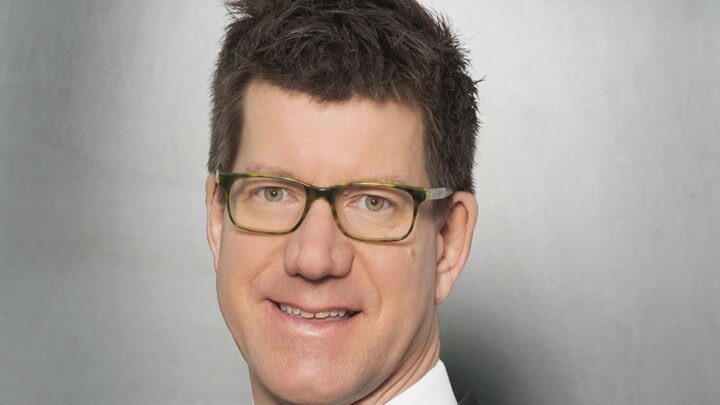
The Expert Council on Climate Issues has reviewed and assessed the Federal Environment Agency’s estimate of Germany’s 2021 emissions data. EWI Director Prof. Dr. Marc Oliver Bettzüge is part of the five-member panel.
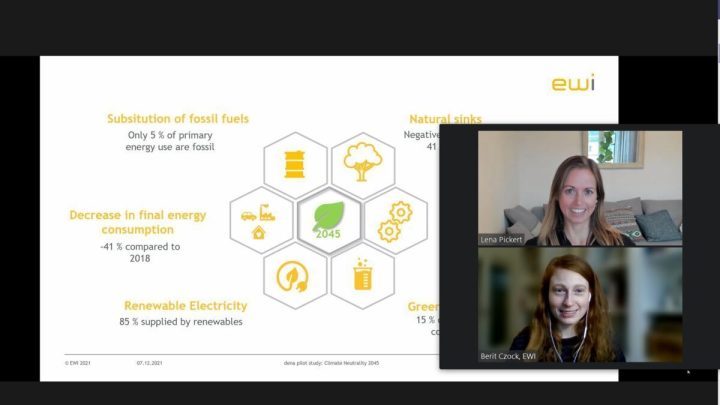
As the main expert of the dena lead study “Aufbruch Klimaneutralität”, the EWI has shown ways to a climate-neutral energy system in Germany. Others have also dedicated themselves to this topic. The results of the most important studies are now presented in a joint comparison.
Photovoltaics, home storage, electric cars: residential buildings are becoming small energy centres. Whether their integration into regional virtual power plants is worthwhile for the overall system and households was investigated by EWI experts as part of the Virtual Institute Smart Energy (VISE).
Against the backdrop of the war in Ukraine, European imports of fossil fuels are under discussion. An analysis by EWI displays current import structures and analyzes the substitutability of supply volumes.
The current regulation sets little incentives to combine the operation of an electrolyser with the build-up of solar capacity. This is the results of a new EWI Policy Brief.
Where will the market ramp-up of hydrogen take us, and how will we get there? Research findings on this have been presented by EWI researchers Philipp Theile and David Schlund.
In a ceremony in Düsseldorf, the EWI was admitted to the Johannes Rau Research Association (JRF).
The EU is planning new regulation on what “green hydrogen” means. A policy brief by the Institute of Energy Economics (EWI) shows possible effects on electrolysers.
The development of a hydrogen economy requires the availability of sufficient transport capacities. How a future hydrogen network in Eastern Germany could be designed to meet the demand and transit requirements until 2045 is investigated in an EWI study.